Match Programme or Scrapbook: Two Ways to Keep a Season
Choose a match programme or scrapbook to keep a rugby season in a form that fits your habits, preserving match details and the memories you value.
A match programme gives a rugby season a ready-made spine; a scrapbook lets you decide what deserves a place on the page. If you are choosing between a match programme or scrapbook, start with the kind of memory you want to keep: a reliable record of fixtures and team details, or a personal account shaped by the moments that stayed with you.
What does a programme keep for you?
A programme is a record made close to match day. It may bring together the fixture, team lineups, club notes, sponsor pages, and printed information about the ground or competition. The club has already chosen the order and presentation, so each issue gives you a consistent piece of the season without asking you to design a page.
That structure matters most when you want to remember the season as a sequence. A stack of programmes can show which teams came to the ground, how a competition unfolded, and what the club chose to say about itself at the time. The printed details may also preserve small, ordinary features that can be hard to recall later, such as a team list or a notice tucked among the pages.
Programmes are particularly useful for a match-by-match habit. Take one home, add a note on the cover or inside margin, and file it with the others. The programme remains the main record; your handwriting adds a little context without changing its format.
What can a scrapbook hold that a programme cannot?
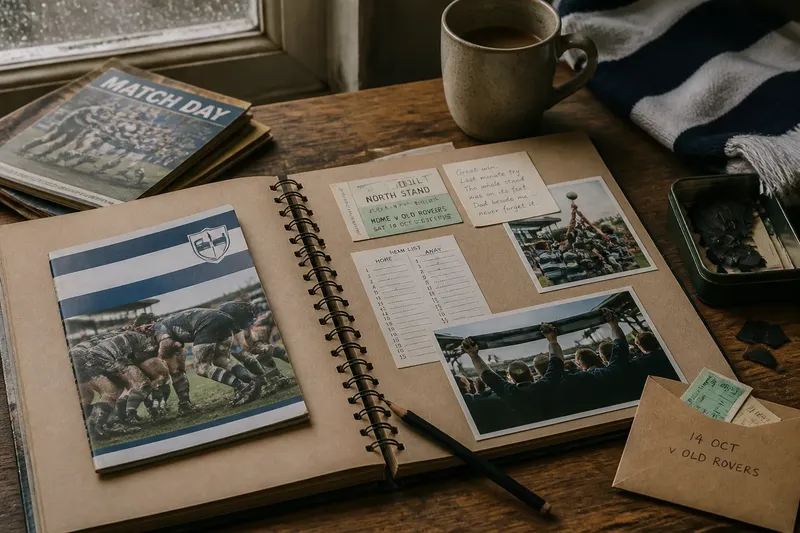
A scrapbook is built around selection. It can bring together a ticket, a programme, a handwritten note, a team photograph, or a clipping, with space for your own account of why those pieces belong together. The season does not have to appear in strict match order. You might group pages around away days, a particular ground, a family tradition, or a player whose contribution you want to remember.
That freedom is also a decision. You choose what to keep, how much room to give it, and what a future reader should notice. A scrapbook can preserve the atmosphere around the match as well as the match itself: the route on the bus, the rain on a paper ticket, or the conversation you still associate with a final whistle.
It need not be elaborate. A plain, acid-free album or a sturdy notebook, photo corners, a soft pencil, and a small envelope for loose paper can be enough to make a useful record. If you use glue, choose an archival product intended for paper; ordinary adhesive can stain or weaken a keepsake over time.
Which format fits the way you remember?
Think about what you naturally do after a match. If you like keeping the printed material intact and want a clear record of fixtures, programmes may suit you. If you tend to save oddments and tell stories around them, a scrapbook may feel more natural. Neither format is more complete in every sense: one follows the club’s printed structure, while the other follows your attention.
Imagine you attend a close home match, bring the programme back, and have a ticket stub and a note about the crowd’s reaction. With a programme-first habit, you can write the note inside the cover and store the stub in a labeled envelope alongside that issue. With a scrapbook habit, you can mount the ticket and a copy of the note on a page, then add the programme’s team list or a short quotation from its club notes. The first choice keeps the issue intact; the second makes the details part of a page you composed.
Ask yourself a few practical questions before choosing:
- Do you want to preserve each match’s printed record in its original form?
- Will you remember to add notes and loose pieces after a match?
- Would you rather browse by fixture or by personal theme?
- Do you have a dry, stable place for paper and photographs?
- Would you enjoy arranging pages, or would that turn the record into a chore?
Your answers can point to a clear preference, but they can also suggest a modest combination. You might keep programmes in order and make one scrapbook page for the season’s most meaningful match. That gives the printed record room to speak for itself while reserving personal interpretation for a few selected moments.
How do you preserve the details without overworking them?
Paper remembers handling. Keep programmes and scrapbook pages away from damp, direct sunlight, and food or drink; store them in a clean box or album that does not press awkwardly against folded or fragile pieces. Use pencil for brief notes on durable paper, and avoid writing over a printed image or a detail you may later want to read.
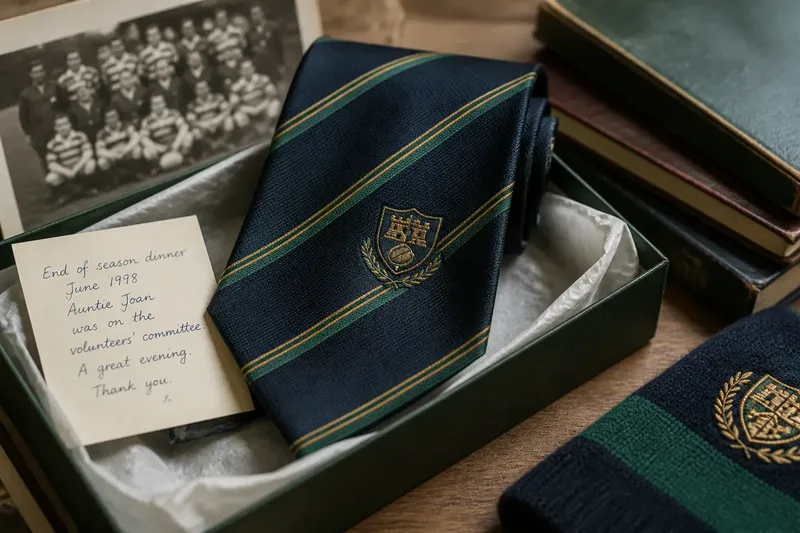
For loose items, write the match or occasion on an accompanying note rather than directly on a ticket or clipping. A stub separated from its context can become just a small piece of paper. A short caption—who was there, where it came from, or why you kept it—can restore the connection without requiring a long diary entry.
For photographs, include a caption with names and the occasion while the details are still clear to you. If you add online material, such as a club announcement or a digital team sheet, print the relevant page and note where it came from and which match it relates to. The aim is not to collect every available record, but to leave enough context for the paper to make sense later.
Which questions help settle the choice?
Can I keep programmes and make a scrapbook too?
Yes. Treat programmes as the season’s ordered archive and use the scrapbook selectively for memories that benefit from photographs, notes, or grouped ephemera. This keeps the two formats distinct instead of forcing every match into both.
Should I write in a match programme?
A brief note can make an issue more personal, but consider whether you want the programme to remain unmarked. If you prefer an untouched copy, put the note on a separate slip and store it with that match’s material.
What belongs on a scrapbook page?
Choose pieces that help explain the memory: a ticket, a clipped team list, a photograph, or a concise handwritten caption. A page does not need to be full; clear context is more useful than decoration that crowds the items.
How should I arrange a season scrapbook?
Use an order you will understand later, such as match date, home and away fixtures, or a theme you genuinely remember. Add a heading or short caption whenever the arrangement would otherwise leave the connection unclear.
What makes the record worth revisiting?
The best format is the one that makes it easy for you to return to the season. A programme can bring back the club’s view of a match through its printed details, while a scrapbook can preserve the pieces you chose and the meaning you attached to them. Each offers a different kind of continuity.
If you are still unsure, begin with the programme from the next match and make one small note about what you want to remember. Later, decide whether that note belongs beside the issue or on a page with other keepsakes. A match programme or scrapbook becomes a record through those specific decisions, and the most useful choice is the one you can keep making without turning remembrance into a task.