The Myth That Old Rugby Kit Is Always Better Kit
Old rugby kit deserves a place only when its condition and purpose make sense. Decide what to use, store, repair or pass on with a clear test.
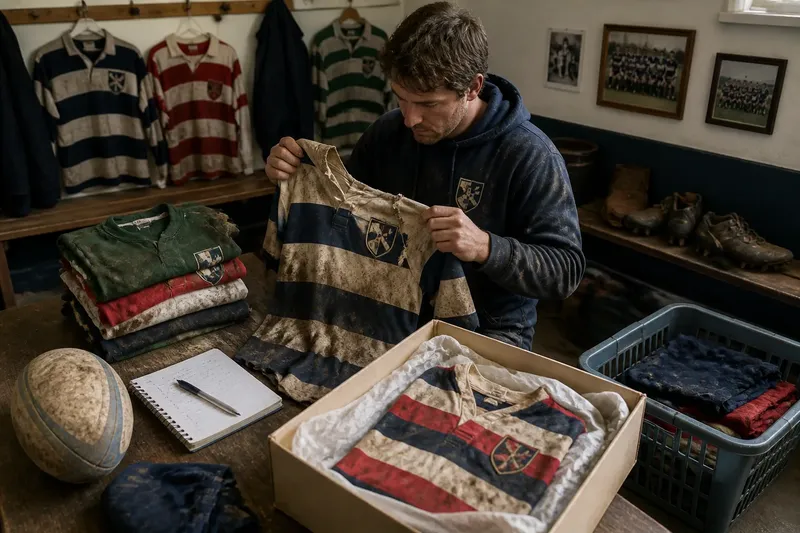
Old rugby kit is not automatically better kit: a faded shirt can still be useful, while a cherished jersey may be too fragile for another muddy session. Age tells you that an item has been around; condition and purpose tell you what to do with it now.
That distinction matters in a club changing room, a household laundry pile and a box of keepsakes. The useful question is not simply “Is this old?” but “Can it still do the job I want, and is that the best job for it?”
What does age actually tell you?
Age may carry a story, but it does not reliably describe fabric strength, fit or safety. A shirt worn once and stored badly can be in worse shape than a much older one that was washed gently and kept dry. Likewise, a modern training top can be more useful for regular play than a vintage jersey with brittle seams.
Rugby kit also has different kinds of value. A jersey might be practical clothing, a reminder of a particular team, an object with club significance, or material that can serve another purpose. Those values can overlap, but they are not interchangeable. A shirt can matter deeply to its owner and still be unsuitable for contact training.
Try separating the item’s history from its current job. If you know who wore it or what it represents, record that information on a note kept with it. Then judge the fabric, seams and fit on their own terms. This keeps sentiment from being mistaken for a condition check, without asking you to dismiss the sentiment.
Can the item still do its original job?
Start with the purpose. A match jersey intended for contact play faces different demands from a warm-up top, a sideline layer or a display piece. Look over the whole garment in good light, turning it inside out where practical. Check seams, hems, closures, badges and printed areas rather than judging only by the front.
Pay attention to changes you can see and feel: fabric that has thinned, a seam that has opened, a collar that no longer sits properly, or a fastening that catches. A repaired tear may be perfectly acceptable for casual wear yet leave the item unsuitable for a particular form of play. If you are deciding whether kit is appropriate for a session, follow the relevant club rules and the maker’s care or use instructions; ask a coach or qualified kit manager where the answer affects player safety.
Fit is part of condition. An item can be clean and intact but still pull, restrict movement or sit poorly on the person who wants to wear it. Try it on over the layers you would actually use, and move naturally through the motions required for that activity. If it feels wrong, its age does not make it right.
Which details are worth checking?
- Fabric: Look for thinning, holes, stiffness, or areas that feel weak compared with the rest of the garment.
- Seams and hems: Check for loose threads, gaps, and repairs that are coming undone.
- Closures: See whether buttons, zippers, or other fastenings work smoothly and stay secure.
- Badges and numbers: Notice peeling, sharp edges, loose stitching, or damage that could worsen with wear.
- Fit and movement: Check whether the item sits comfortably and allows the intended activity.
- Storage condition: Look for dampness, musty odor, fading, or signs that pests have reached the material.
- Care information: Read the label before washing or attempting a repair, especially when materials or embellishments differ.
These checks are not a scorecard where one flaw settles everything. A loose thread on a display shirt may be a small conservation issue; a failing seam on kit meant for active play is a more immediate reason to stop and reconsider. The decision depends on what the item is being asked to do.
When should you use, store, repair or reuse it?
Use an item when it is sound enough, fits its wearer and suits the activity. Store it when its main value is memory or club history and wearing it would expose delicate material to sweat, washing or rough handling. Repair it when a limited, appropriate fix can restore the intended use without damaging the fabric or obscuring a meaningful feature. Reuse it for another purpose when it cannot reasonably do its first job but still has material or design worth keeping.
Imagine a former player finds an old club jersey in a dry cupboard. The body fabric is sturdy, but a shoulder seam is open and a stitched badge is beginning to lift. If the player wants it for contact training, the sensible next move is to set it aside until a suitable repair has been assessed, rather than treating its age as proof that it is ready. If preserving the badge matters more than wearing it, the jersey can instead be stored flat and dry; if the fabric is sound but the fit no longer works, a club craft group might consider using it for a banner panel or patch material.
That is a decision, not a verdict on the jersey’s worth. A keepsake does not need to be wearable to remain meaningful, and a worn garment does not have to become waste just because its first role has ended.
How can a repair respect the item?
Match the repair to both the material and the intended use. A simple loose hem on everyday training clothing may be suitable for an ordinary sewing repair, while a delicate vintage shirt with a fragile badge may call for a textile conservator or an experienced garment repairer. Avoid attaching a heavy patch to thin fabric if the added weight could pull at the surrounding area.
Keep the repair modest when the item’s visual history matters. A patch placed across an old name or club emblem may make the garment more wearable but erase the detail that made it worth keeping. Before altering a shirt, take a clear photograph of its front, back, labels and distinctive marks. That record can help a family or club remember the object’s details if it is later repaired, passed on or repurposed.
Cleaning is also a form of intervention. Follow the care label and take account of older prints, stitched badges and mixed materials. If a mark will not lift with ordinary care, stop before trying aggressive products or treatments that could damage the fabric. For a fragile or especially significant item, seek advice from someone qualified to handle textiles.
What if the kit is no longer wearable?
Look for a next use that fits what remains sound. A sturdy panel might become a pennant or a small cushion cover; a clean section with a legible emblem could be kept as a fabric memento; intact kit may suit a club’s loan cupboard or a community clothing exchange. A damaged item may have no useful second life, and that is not a failure of stewardship. The aim is to make a considered choice, not to preserve every scrap indefinitely.
Before passing kit on, be candid about condition. Note repairs, missing pieces and any limits on use so the recipient can decide whether it suits their needs. A shirt offered as a display object may be welcome even when it is not suitable for play. A garment intended for donation should be clean and in a condition the receiving group can accept; check its current requests rather than assuming every organization can use every item.
Some objects are better kept close to the club than sent home without context. A historic team jersey, for example, may be more meaningful when its wearer or season is documented. A small label with known details—who owned it, which club it came from, and any repair history—can travel with the garment. If those facts are uncertain, say so rather than filling gaps with guesses.
How do you decide whether old rugby kit belongs in use?
Is a faded shirt automatically unsuitable for play?
No. Fading alone does not tell you whether the fabric, seams or fit are sound enough for the intended activity. Inspect the garment and follow applicable club guidance rather than using color as a stand-in for condition.
Should a repaired jersey go back into regular use?
That depends on the repair, the garment’s condition and the job it must do. If the fix affects a load-bearing seam or the item will be used in contact play, have a suitable club representative or repair professional assess it before use.
Is it better to store a meaningful shirt than wear it?
Choose storage when regular wear would put fragile fabric, printing or badges at risk, or when the object’s main purpose is remembrance. Keep it clean and dry, avoid compressing delicate details, and store its known history alongside it.
Can damaged kit still be passed on?
Often, if the recipient knows exactly what is damaged and wants the item for repair, display or material reuse. Be clear about its limits, and do not present it as ready for play if you have doubts about its condition.
What makes a useful decision?
A good decision names both the item’s present condition and its next purpose. “Keep it because it is old” leaves the garment in limbo; “store it because the badge is fragile,” “repair it for casual wear,” or “offer it as fabric for reuse” gives it a clear place.
For old rugby kit, the condition-and-use test is simple to repeat: inspect what is there, decide what the item should do, and choose the least damaging route that makes sense. Age can enrich the story, but care is what lets that story travel forward.