A Calm End-of-Season Kit Sort
An end-of-season kit sort helps you separate the shirts, socks and layers that tell your rugby story from everyday gear, and decide how to keep each one.
An end-of-season kit sort is easier when you begin with the story attached to each piece, not with a pile of washing. A rugby shirt can carry a club’s colors, a changing sponsor, a tour memory or the name of a teammate; the details on its surface often matter more than whether it is still useful on the field.
What makes an end-of-season kit sort meaningful?
Treat this as a small piece of club history, not a household clear-out. Look for details that locate a garment in a particular time or place: a competition patch, an old crest, a sponsor logo, a squad number, stitched initials or a tour badge.
Those features can turn an ordinary training top into an object worth documenting. Before handling a shirt further, note what you already know: whose it was, which team wore it, and what season or occasion it recalls. If a detail is uncertain, write down the uncertainty rather than guessing.
How can you record a shirt’s rugby story?
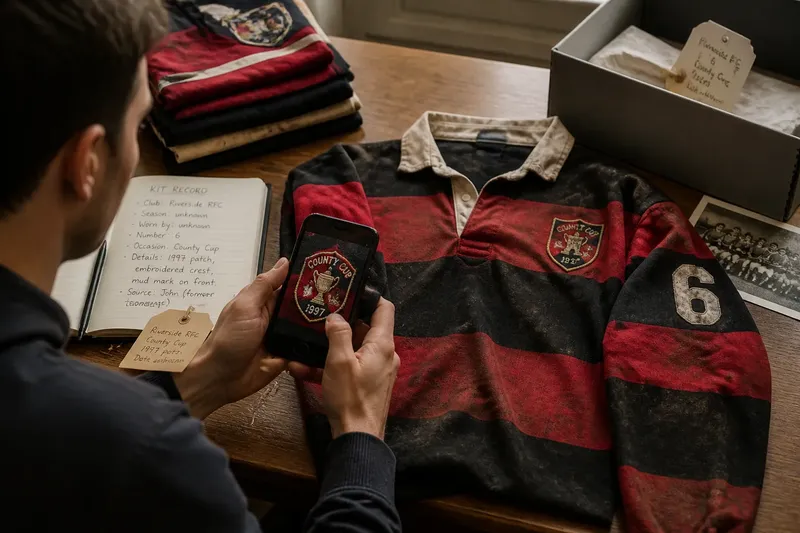
Make a short record before deciding where the item belongs. A phone camera, a notes app, and an acid-free paper tag are enough for a simple home archive. Photograph the front and back, then take closer images of distinctive badges, names, repairs or fading that help identify the shirt later.
- Club and season: record the club name and the season if known; write “unknown” rather than filling a gap with a guess.
- Person or role: note the wearer, squad number or position only if you can identify it.
- Occasion: add a match, tour, presentation or personal memory that explains why this piece stands out.
- Visible details: describe the crest, sponsor, patch, initials, repairs or other features visible in the photographs.
- Source: note who supplied the information, such as a family member or club contact, so later readers can distinguish memory from confirmed detail.
Say you have a red-and-black shirt with a tournament patch but no reliable season date. Photograph the patch and shirt, write “date unknown,” and ask a former teammate which tournament it came from. If they cannot identify it, the record still preserves what is visible without turning a guess into club history.
What should you do with a shirt that carries a specific memory?
Give the memory a clear place alongside the garment. A label can identify the wearer and occasion; a short note can explain why the shirt matters. If the story belongs to someone else, ask before recording personal details or sharing photographs outside the family or club.
Not every meaningful item needs to be kept as clothing. A shirt may be displayed, stored with its note, or included in a club archive if the club accepts it. Ask the relevant person or organization before donating an item, especially when ownership or the wearer’s wishes are unclear.
How do you care for a rugby shirt with historic details?
Keep care decisions separate from the story you are documenting. Read the garment label, avoid rubbing or pulling at loose badges, and do not try to remove stains or repair damage if doing so could affect a feature you want to preserve. For a fragile shirt or one with uncertain materials, ask a textile conservator or museum professional for advice.
If you store the garment, use a clean, dry place away from direct sunlight and damp. Keep the written record with it, but avoid attaching a sticky label directly to fabric. A labeled archival box or a clean cotton cover can keep the item together with its identifying note.
What questions help identify a rugby shirt’s story?
How can I identify an old rugby shirt?
Check the crest, sponsor, competition patches, maker’s label, number and any initials, then photograph each detail. Ask a club historian or former teammate about uncertain clues, and keep unconfirmed dates clearly marked as uncertain.
Should I write on the shirt’s label?
Avoid adding ink or adhesive to the garment itself, particularly if it may be kept as a club or family record. Put the identification on a separate paper tag or in a digital note, and store that information beside the shirt.
Can a club keep a player’s shirt?
It can, if the owner agrees and the club has a suitable place and purpose for the item. Confirm who owns the shirt, record the details the club knows, and ask who will look after it.
What if the season or wearer is unknown?
Record the visible facts and mark the missing information as unknown. A clear note about uncertainty is more useful than a confident but unsupported identification.
A useful end-of-season kit sort leaves more than a tidy shelf: it keeps the shirt’s identifying details connected to the people and occasions behind them. When you revisit the item, the photographs and note can help you recognize what it represents without relying on a fading memory.
If the shirt may matter to a club, family or future wearer, make the record before its labels and details become harder to recognize. Even a brief, honest note gives the next person a better starting point.